

[2026] Pass Key features of ServSafe-Manager Course with Updated 93 Questions
ServSafe-Manager Sample Practice Exam Questions 2026 Updated Verified
ServSafe ServSafe-Manager Exam Syllabus Topics:
| Topic | Details |
|---|---|
| Topic 1 |
|
| Topic 2 |
|
| Topic 3 |
|
| Topic 4 |
|
| Topic 5 |
|
| Topic 6 |
|
NEW QUESTION # 27
When sanitizing utensils using hot water in a three-compartment sink, the temperature of the hot water must be at least
- A. $171^{\circ}F$ ($77^{\circ}C$).
- B. $110^{\circ}F$ ($43^{\circ}C$).
- C. $165^{\circ}F$ ($74^{\circ}C$).
- D. $180^{\circ}F$ ($82^{\circ}C$).
Answer: A
Explanation:
If an operation chooses to use heat instead of chemicals to sanitize utensils in a three-compartment sink, specific temperature requirements must be met to ensure the destruction of pathogens. According to the FDA Food Code and ServSafe, the water in the third (sanitizing) compartment must be at least$171^{\circ}F$ ($77^{\circ}C$). Additionally, the items being sanitized must be completely immersed in this hot water for a minimum of30 seconds.
Maintaining this temperature is challenging in a manual sink and typically requires a heating element or
"booster" to keep the water consistently hot. If the water drops below $171^{\circ}F$, it is no longer considered a reliable sanitizer. For comparison, $110^{\circ}F$ (Option A) is the minimum temperature for thewash(first) sink. $180^{\circ}F$ (Option D) is the temperature required for the final sanitizing rinse in a stationary rack, single-temperature machine or a high-temperature conveyor machine. Using heat-based sanitizing requires the manager to provide staff with a way to verify the temperature, such as a waterproof thermometer or heat-sensitive tape. This method is effective but requires strict monitoring to prevent staff from being burned and to ensure the 30-second immersion time is strictly followed.
NEW QUESTION # 28
Cross-contamination can be prevented by:
- A. storing glass thermometers in rubbing alcohol when not in use.
- B. purchasing produce only from approved suppliers.
- C. using color-coded cutting boards and utensils.
- D. reheating food to $165^{\circ}F$ ($74^{\circ}C$) for 15 seconds.
Answer: C
Explanation:
Cross-contamination is one of the leading causes of foodborne illness, occurring when pathogens are transferred from one surface or food item to another. The ServSafe curriculum emphasizes that the most effective way to prevent this is through the physical separation of raw and ready-to-eat (RTE) foods. Using color-coded cutting boards and utensils is a gold-standard practice in active managerial control. In this system, different colors are assigned to specific food groups: for example, red boards for raw meat, yellow for raw poultry, blue for seafood, and green for produce or RTE items.
This visual cue system helps staff avoid the "unintentional" error of using a knife that just cut raw chicken to subsequently chop lettuce for a salad. While reheating food (Option A) can kill bacteria, it is a "corrective action" for time-temperature abuse, not a primary prevention method for cross-contamination. Purchasing from approved suppliers (Option B) is vital for food safety, but it does not stop contamination from happening once the food is inside the kitchen. Storing thermometers in chemicals (Option C) is incorrect as they must be washed and sanitized properly. Color-coding provides a simple, non-verbal communication tool that works across language barriers and high-speed service environments. Beyond just boards, this should extend to tongs, knives, and even cleaning cloths. When combined with proper handwashing and sanitizing between tasks, color-coding creates a redundant safety barrier that significantly reduces the risk of pathogens moving through the "Flow of Food." Managers must train staff to recognize the colors and monitor the kitchen to ensure that "cross-overs" never occur, preserving the integrity of the finished dish.
NEW QUESTION # 29
For a foodborne illness to be considered a confirmed outbreak, at least how many people must become sick?
- A. 0
- B. 1
- C. 2
- D. 3
Answer: C
Explanation:
According to the National Restaurant Association and the CDC standards used by ServSafe, a foodborne- illness outbreak is defined by three specific criteria. First,two or more peoplemust experience the same symptoms after eating the same food. Second, an investigation must be conducted by state or local regulatory authorities (such as the health department). Third, the outbreak must be confirmed by laboratory analysis, which identifies the specific pathogen (likeSalmonellaorNorovirus) in both the affected individuals and the food source.
Understanding this definition is vital for a Food Protection Manager because the reporting and investigation process only "confirms" an outbreak when that second person is linked to the event. A single case (Option A) is considered an "illness" but not an "outbreak," though it should still be taken seriously. There are rare exceptions-such as cases of Botulism or Scombroid poisoning-where even a single case may trigger an immediate emergency investigation, but for the general purposes of the ServSafe exam and standard regulatory definitions, the number is two. When a suspected outbreak occurs, the Manager's role is to cooperate with the authorities, isolate any remaining suspected food (labeling it "Do Not Use/Do Not Discard"), and provide records like temperature logs and staff schedules. This helps investigators trace the source of the contamination, whether it was a failure in the "Flow of Food" (like improper cooling) or a sick employee. Proactive management and adherence to the FDA Food Code are designed to prevent these outbreaks from occurring by breaking the chain of contamination before it can affect multiple guests.
NEW QUESTION # 30
In order to prevent food contamination, a food handler must:
- A. wash and rinse all utensils regularly.
- B. maintain refrigerated foods at or about $45^{\circ}F$ ($7^{\circ}C$).
- C. practice frequent handwashing.
- D. sanitize all work surfaces every 5 hours.
Answer: C
Explanation:
While all the options listed relate to general kitchen operations,frequent handwashingis the single most important practice a food handler can perform to prevent the spread of foodborne illness. According to the CDC and ServSafe, human hands are the primary vehicle for transferring pathogens likeNorovirus,Hepatitis A
, andStaphylococcus aureusto food and food-contact surfaces. Handwashing is a "preventative" measure that addresses the root cause of many outbreaks: poor personal hygiene.
The FDA Food Code is very specific about handwashing: it must take at least 20 seconds, with at least 10-15 seconds of vigorous scrubbing. It must be done in a dedicated handwashing sink-never in a prep sink or three-compartment sink. Food handlers must wash their hands at critical junctures: after using the restroom, after touching their face or hair, after handling raw meat, after coughing or sneezing, and before putting on gloves. Option B is incorrect because the safe holding temperature is $41^{\circ}F$ or lower, not $45^{\circ} F$. Option C is incorrect because frequently used surfaces must be sanitized every 4 hours, not 5. Option D is a general task, but it doesn't match the critical preventative impact of hand hygiene. By making handwashing a mandatory, frequent habit, the manager ensures that the most common path of contamination is blocked.
This is often described as the "gold standard" of food safety because it protects the food throughout the entire
"Flow of Food," from preparation to the final service to the customer.
NEW QUESTION # 31
A server finds a full napkin-lined basket of dinner rolls on a table after a customer has left the establishment. According to the FDA Food Code, what should the server do with the rolls and napkin?
- A. Remove the napkin and discard the rolls.
- B. Replace the napkin and donate the unused rolls to charity.
- C. Replace the napkin and give the unused rolls to employees for staff meal.
- D. Reuse the napkin but replace the rolls with fresh ones.
Answer: A
Explanation:
The FDA Food Code is very clear regarding the re-service of food. Once food has been served to a guest, it is considered "potentially contaminated" and cannot be served to another guest, donated, or given to staff.
Therefore, the server mustdiscard the rolls. Even if the rolls appear untouched, they have been exposed to the guest's environment, where they may have been coughed on, sneezed on, or touched with unwashed hands.
The only exceptions to this "no re-service" rule are foods that are packaged and in good condition, such as unopened cracker packets, individual condiment packets (like ketchup or mustard), or wrapped "saltine" crackers. Rolls in an open basket do not meet this criteria. Regarding the napkin, if it is a cloth napkin, it must be sent to the laundry. If it is a paper napkin, it must be discarded. Reusing any part of the service (Option B) or donating contaminated food (Option C) poses a significant risk of spreading foodborne illness, specifically StovirusorStaphylococcus aureus. Managers must train front-of-house staff to never "recycle" bread, butter, or garnishes that have been placed on a customer's table. This protocol ensures that every guest receives food that is fresh and has not been subjected to previous human contact.
NEW QUESTION # 32
Which risk may result from having a cross-connection?
- A. Beverage dispensers may get damaged by corrosive minerals.
- B. Grease traps may get blocked.
- C. Sprinkler systems may get disabled.
- D. The drinkable water supply may get contaminated.
Answer: D
Explanation:
A cross-connection is a physical link between safe (potable) water and dirty (non-potable) water. This link is extremely dangerous because it can result inbackflow, which is the unwanted reversal of water flow that can contaminate the drinkable water supply. Backflow can happen through "back-siphonage" (when a vacuum is created in the plumbing system, like during a fire or a water main break) or "back-pressure." For example, if a hose is left submerged in a bucket of mop water or a prep sink, a sudden drop in pressure could suck that dirty water back into the facility's clean water lines.
To prevent this, the FDA Food Code requires the use of backflow prevention devices, such as a vacuum breaker on a hose bib, or, most effectively, anair gap. An air gap is a physical space that separates a water supply outlet from any potentially contaminated source. Options A, B, and D are plumbing issues, but they do not describe the severe public health risk associated with a cross-connection. Contaminated water can spread pathogens likeE. coli,Hepatitis A, and chemicals throughout the entire kitchen, affecting everything from handwashing to ice machines. Managers must ensure that all plumbing is installed by licensed professionals and that no "temporary" hose connections are made that could bypass safety gaps. Regular inspection of backflow prevention devices is a critical component of maintaining a safe facility.
NEW QUESTION # 33
What must a food handler do with an uneaten basket of dinner rolls that was returned to the kitchen?
- A. Repurpose the rolls as croutons.
- B. Allow employees to eat.
- C. Throw the rolls away.
- D. Donate the rolls to a local shelter.
Answer: C
Explanation:
The FDA Food Code and ServSafe standards maintain a strict "No Re-service" policy to protect public health.
Once food has been served to a customer, it is considered potentially contaminated and must never be served to another guest, repurposed for other dishes, or consumed by staff. Even if the dinner rolls appear untouched or were in a lined basket, they have been exposed to the customer's environment. This includes potential exposure to airborne droplets from coughing or sneezing, and contact with unwashed hands or contaminated table surfaces.
The only exceptions to this rule are for "pre-packaged" foods that are still in their original, unopened, and pristine condition, such as individual cracker packets or sealed condiment pouches. Fresh bread, rolls, or open butter dishes do not meet this exception. Repurposing them as croutons (Option C) is a violation because the
"cooking" process for croutons may not be sufficient to eliminate all pathogens introduced by the guest, and it establishes a dangerous precedent for food safety culture. Donating (Option B) or allowing staff to eat the rolls (Option D) also poses a risk of spreading foodborne illnesses likeNorovirusorStaphylococcus aureus.
The only safe and compliant action is immediate disposal. Managers must train staff to recognize that the cost of a few rolls is negligible compared to the risk of a foodborne illness outbreak and the loss of customer trust.
NEW QUESTION # 34
When should food handlers use hand antiseptics?
- A. After washing hands
- B. Before washing hands
- C. Instead of washing hands
- D. After putting on gloves
Answer: A
Explanation:
Hand antiseptics (hand sanitizers) are often misunderstood in the foodservice industry. According to the ServSafe Manager curriculum and the FDA Food Code, hand antiseptics arenever a substitute for handwashing. They must only be usedafterthe full handwashing process has been completed and the hands have been dried.
Image of handwashing vs. hand antiseptic use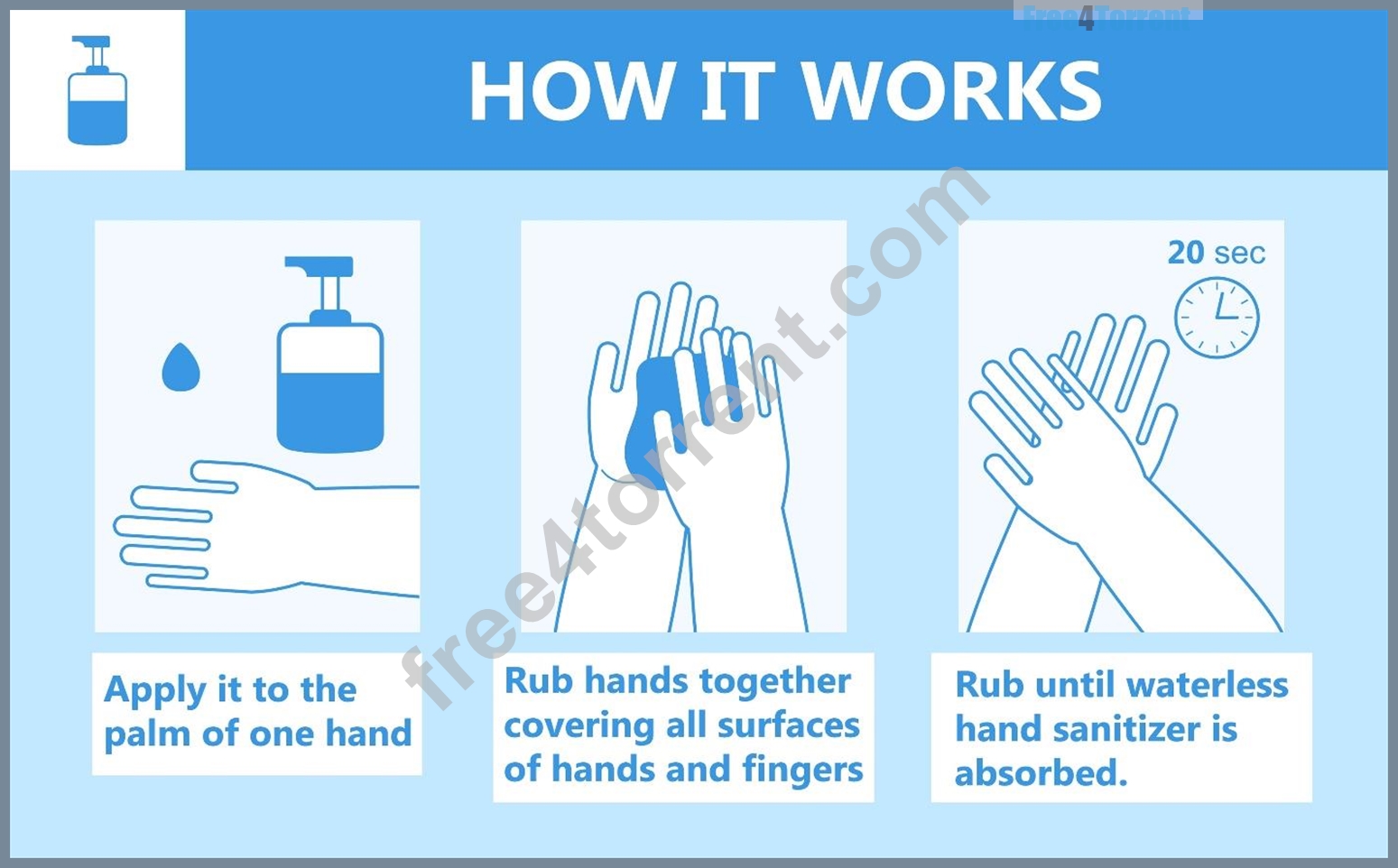
Shutterstock
The primary reason for this is that antiseptics are not effective at removing dirt, grease, or certain tough-to-kill pathogens likeNorovirusorHepatitis Aif the hands are soiled. Soap and water, combined with the mechanical friction of scrubbing, are required to physically lift and wash away these contaminants. An antiseptic used on dirty hands will simply be neutralized by the organic matter. Furthermore, the antiseptic used must be compliant with the FDA's "Code of Federal Regulations" for food contact. If an antiseptic is used, the food handler must allow it to completely air-dry before touching food or equipment to avoid chemical contamination. Using it before washing (Option B) is useless as the soap will wash it away, and using it instead of washing (Option A) is a major health code violation. Managers should view antiseptics as an "extra layer" of protection, but the core focus must always remain on rigorous, frequent handwashing at the appropriate times.
NEW QUESTION # 35
As part of an operation's food defense program, the Person in Charge (PIC) should
- A. restrict access by unauthorized personnel.
- B. allow staff to store personal items in the food prep area.
- C. accept deliveries from unapproved suppliers.
- D. report suspicious activity to the FD
Answer: A
Explanation:
Food defense is the effort to protect food from acts of intentional contamination or tampering. While food safety focuses on accidental contamination, food defense addresses the threat of someone-such as a disgruntled employee, a competitor, or a terrorist-deliberately making food unsafe. The ServSafe Manager curriculum utilizes the FDA'sA.L.E.R.T.acronym to guide managers in creating a food defense program. A critical component of this program is the "L" in A.L.E.R.T., which stands forLook, emphasizing the need to monitor the security of products in the facility.Restricting access by unauthorized personnelis a primary step in this process.
The PIC must ensure that only authorized staff members are in the back-of-house areas, storage rooms, and loading docks. This includes managing delivery personnel, service technicians, and visitors. Access points should be locked when not in use, and there should be a system for identifying employees and visitors.
Allowing staff to store personal items in prep areas (Option B) is a hygiene and safety violation, and accepting deliveries from unapproved suppliers (Option D) bypasses the "Assure" stage of food defense.
While reporting suspicious activity to the FDA (Option A) is a potential secondary step, the first line of defense is preventing unauthorized people from gaining access to the food supply in the first place. By controlling who enters the kitchen and storage zones, the manager significantly reduces the risk of malicious tampering or the introduction of harmful biological or chemical agents into the flow of food.
NEW QUESTION # 36
A food handler who is diagnosed with norovirus and is symptomatic should be
- A. allowed to stay off work for 12 hours.
- B. excluded from the operation.
- C. terminated as soon as possible.
- D. restricted from working around food.
Answer: B
Explanation:
The "Big 6" pathogens, which includeNorovirus, are highly contagious and can cause severe foodborne illness even in small doses. According to the ServSafe Manager curriculum, there is a strict distinction between "restricting" and "excluding" an employee. If an employee is diagnosed with Norovirus and is exhibiting symptoms (such as vomiting or diarrhea), the Person in Charge (PIC)must excludethem from the operation entirely. This means they are not allowed to be in the building, as they pose a high risk of spreading the virus through the air or surface contact.
Norovirus is the leading cause of foodborne illness in the U.S. and is often spread through the fecal-oral route.
An excluded employee cannot return to work until they have been asymptomatic for at least24 hours(some jurisdictions require 48 hours) or provide a written release from a medical practitioner. Managers must report these diagnoses to the local regulatory authority. Simply "restricting" the employee (Option D)-which would mean letting them do non-food tasks like taking out the trash-is insufficient for Norovirus because of its high transmissibility. Correct management of sick employees is a primary component of "Active Managerial Control." By following the mandatory exclusion rules, the manager protects the health of the customers and the reputation of the business.
NEW QUESTION # 37
A non-food-contact surface must be
- A. Underwriters Laboratories (UL) certified.
- B. Occupational Safety and Health Agency (OSHA) approved.
- C. color coded.
- D. nonabsorbent.
Answer: D
Explanation:
According to the ServSafe Manager curriculum and the FDA Food Code, the physical requirements for surfaces in a foodservice operation are strictly categorized into food-contact and non-food-contact surfaces. A non-food-contact surface-such as the exterior of a refrigerator, the legs of a prep table, or the walls of the kitchen-is not designed to come into direct contact with food during normal operations. However, these surfaces must still be constructed from materials that arenonabsorbent, smooth, and durable. This requirement is fundamental because surfaces that absorb moisture (like unsealed wood or porous grout) can trap food particles, liquid, and grease, which eventually leads to the growth of bacteria, mold, and unpleasant odors.
Furthermore, an absorbent surface is significantly harder to clean and sanitize. Moisture trapped within a surface can harbor pathogens likeListeria monocytogenes, which thrives in damp environments and can easily be transferred to food-contact surfaces through "splash-back" or a food handler's hands. While Underwriters Laboratories (UL) provides safety certifications for electrical components (Option A) and OSHA (Option C) focuses on workplace safety rather than food hygiene, the FDA Food Code focuses on the "cleanability" of the facility. Being nonabsorbent ensures that cleaning solutions can effectively reach the entire surface and that the area can be dried completely, which is a key step in preventing pest infestations and maintaining overall kitchen sanitation. Managers must ensure that any repairs or new installations in the facility use materials that meet these non-absorbent standards to remain in compliance with local health regulations.
NEW QUESTION # 38
Cloth napkins used to line a container for the service of foods should be replaced
- A. at the beginning of each shift when containers are filled.
- B. at the end of each shift when containers are refilled.
- C. each time the consumer asks for the container to be refilled.
- D. each time the container is refilled for a new consumer.
Answer: D
Explanation:
The reuse of linens in contact with food is strictly regulated to prevent the spread of pathogens. According to the ServSafe Manager curriculum and the FDA Food Code, cloth napkins or linens used to line bread baskets or other food containers must be replacedeach time the container is refilled for a new consumer. This is because the linen has been exposed to the environment and potential contamination from the previous guest, including saliva, touch, or airborne droplets.
Linens are considered "single-use" in the sense that they must be laundered after one service sitting. If a container is refilled for thesamecustomer during their meal (Option B), the napkin does not necessarily need to be changed, though it is good practice. However, once that guest leaves, the napkin and any leftover food must be removed. The napkin must then be laundered according to commercial standards (using high heat and chemicals) before it can be used again. Waiting until the end of a shift (Option D) or the beginning of a new one (Option A) would allow for the accumulation of bacteria and significant cross-contamination between different groups of diners. This rule is a subset of the "No Re-service" policy, ensuring that every guest receives a clean, sanitary dining experience free from the biological hazards of previous occupants.
NEW QUESTION # 39
NSF International is an organization that
- A. evaluates and tests foodservice equipment.
- B. writes the Food Code.
- C. enforces food safety regulations.
- D. provides safety data sheets.
Answer: A
Explanation:
NSF International(formerly the National Sanitation Foundation) is an independent, non-profit organization that develops standards for the design, construction, and "cleanability" of commercial foodservice equipment.
When a piece of equipment, such as a refrigerator, prep table, or dishwasher, carries theNSF mark, it means the item has been evaluated and tested to ensure it meets rigorous public health standards. For example, NSF- certified equipment must have smooth, non-absorbent surfaces, be easy to disassemble for cleaning, and be free of "dead spaces" where food bits or bacteria can hide.
Managers should always look for the NSF or ANSI (American National Standards Institute) mark when purchasing new equipment. The FDA Food Code (Option A) is written by the FDA. Safety Data Sheets (Option C) are provided by chemical manufacturers to comply with OSHA requirements. Enforcement of regulations (Option D) is the responsibility of state and local health departments. Using NSF-certified equipment is a proactive safety measure because it ensures that the physical tools in the kitchen are designed to prevent contamination and can be effectively sanitized. During a health inspection, the inspector will check that commercial-grade, certified equipment is being used; household-grade appliances are generally prohibited because they are not durable or "cleanable" enough for high-volume commercial use.
NEW QUESTION # 40
There has been a recall of chicken tenders due to intentional tampering. The Person in Charge (PIC) has determined that the operation serves the type of chicken tenders recalled. What should the PIC do?
- A. Tell food handlers to cook the tenders longer.
- B. Donate all of the chicken tenders to a local food bank.
- C. Continue serving, since the probability of having received tainted food is slim.
- D. Immediately locate and isolate all of the chicken tenders and call the regulatory authority.
Answer: D
Explanation:
Intentional tampering is a "food defense" issue and represents a critical threat to public safety. Unlike accidental biological contamination, intentional tampering may involve chemical, physical, or biological agents that are not necessarily destroyed by heat. Therefore, telling staff to cook the food longer (Option A) is an ineffective and dangerous response. According to ServSafe guidelines for managing recalls, especially those involving a security threat, the PIC must immediately take t1he product out of service by locating and isolating it.
The isolated food must be clearly labeled with "Do Not Use" and "Do Not Discard" signs to prevent any accidental preparation. It should be stored in a separate area from all other food and equipment. Furthermore, because this recall involves "intentional tampering," the PIC must notify the local regulatory authority (health department) and potentially law enforcement. This ensures that the incident is tracked and that the source of the tampering can be investigated. Continuing to serve the food (Option B) is gross negligence. Donating the food (Option D) is unethical and illegal, as it passes a known hazard to another population. This procedure is a key part of theA.L.E.R.T.food defense program, specifically the "Report" and "Threat" components, which emphasize transparency and cooperation with health officials during a crisis.
NEW QUESTION # 41
A label on foods prepared and packaged onsite for retail sales must list which information?
- A. Use-by dates that are 5 days after product prep
- B. A copy of the recipe used to prep the product
- C. Inspection score of the prep facility
- D. A list of all ingredients used in descending order by weight
Answer: D
Explanation:
When a food establishment packages food for retail sale (such as a "grab-and-go" cooler), it must comply with strict labeling requirements mandated by the FDA Food Code. The label must include the common name of the food, the quantity (weight), the name and place of business of the manufacturer, and, crucially, alist of all ingredients in descending order by weight. This transparency is vital for consumer safety, particularly regarding food allergies.
The label must also clearly identify any of theBig 9 major allergenscontained in the food. If an ingredient (like bread) contains other sub-ingredients, those must also be listed. Option A is incorrect because the specific recipe is proprietary and not required for a safety label. Option C is incorrect as inspection scores are public record but not required on food labels. Option D is incorrect because the standard shelf life for TCS food is 7 days, not 5, and the specific date must be calculated based on the earliest expiring ingredient. Proper labeling allows guests to make informed decisions and protects the establishment from liability in the event of an allergic reaction. Managers must verify that every packaged item is accurately labeled before it is placed in the retail area to ensure compliance with both federal and local health laws.
NEW QUESTION # 42
Which of the following is a major food allergen?
- A. Apples
- B. Celery
- C. Mushrooms
- D. Shrimp
Answer: D
Explanation:
While individuals can be allergic to almost any protein, the FDA identifies a specific group of foods that account for the majority of severe allergic reactions in the United States. These are known as the "Big 9." Shrimp, which falls under the category ofCrustacean Shellfish, is one of these major allergens. The other eight are milk, eggs, fish (such as bass, flounder, or cod), tree nuts (such as walnuts or pecans), peanuts, wheat, soy, and the most recently added, sesame.
Identifying major allergens is a critical responsibility for a Food Protection Manager. When a guest reports an allergy to one of these items, the staff must take extraordinary care to preventcross-contact. This includes using separate, sanitized equipment and ensuring that no trace of the allergen (like shrimp juice or shells) touches the guest's meal. Mushrooms, celery, and apples (Options B, C, and D) are not currently classified as
"major" allergens under U.S. law, though they can still cause reactions in sensitive individuals. Managers must ensure that all staff-from servers to line cooks-can identify the Big 9 and understand the establishment's procedures for handling allergen-sensitive orders. This includes checking labels on all processed foods, as allergens can often be "hidden" in ingredients like flavorings or thickeners.
NEW QUESTION # 43
An operation must hire a pest control operator who is
- A. bonded.
- B. experienced.
- C. licensed.
- D. insured.
Answer: C
Explanation:
Integrated Pest Management (IPM) is a critical part of maintaining a safe food facility. Pests such as cockroaches, rodents, and flies are not just a nuisance; they are biological hazards that carry pathogens like Salmonella,Shigella, andE. coli. ServSafe Manager guidelines mandate that an operation must work with a licensed Pest Control Operator (PCO). While being bonded, insured, or experienced are positive business attributes, the legal and safety requirement focuses on the license.
A licensed PCO has the specialized training to handle restricted-use pesticides that are not available to the general public. They understand the behavior of pests and can develop a customized prevention and treatment plan that is safe for a food-handling environment. The FDA Food Code prohibits food handlers from applying their own pesticides because improper application can lead to chemical contamination of food and surfaces. A PCO will provide documentation of their visits, the chemicals used, and recommendations for facility repairs (such as sealing cracks or fixing floor drains). Managers are responsible for providing the PCO with access to the building and following through on their suggestions for "pest-proofing." This partnership is a proactive
"Food Safety Management System" designed to deny pests food, water, and shelter before an infestation can take root.
NEW QUESTION # 44
The Person in Charge (PIC) notices that a food handler has an infected wound on his or her hand. They must require the food handler to
- A. get a release from a medical practitioner.
- B. cover the wound with a waterproof bandage and single-use glove.
- C. work in the office until the wound heals.
- D. apply antibacterial cream to the wound.
Answer: B
Explanation:
According to the ServSafe Manager curriculum and the FDA Food Code, an infected wound, cut, or boil on a food handler's hand or wrist is a potential source ofStaphylococcus aureus. This pathogen is commonly found on the skin and can easily be transferred to food or food-contact surfaces. To mitigate this risk, the wound must be properly contained. The standard requirement is a "double barrier" system: the wound must first be covered with awaterproof, leak-proof bandage(such as a finger cot or rubber stall), and then asingle- use glovemust be worn over the bandage.
If the wound is on the arm, it must be covered with a waterproof bandage, but a glove is not required as the arm does not typically make direct contact with food. However, for wounds on the hand or wrist, the glove is mandatory. This is a "restriction" protocol. The employee can still work with food as long as the wound is completely covered and the barrier is maintained. If the wound cannot be properly covered (for example, if it is persistently oozing or if the employee cannot wear gloves), the PIC mustrestrictthe employee from working with exposed food, clean equipment, or utensils. This procedure ensures that biological contaminants from the infection do not enter the "Flow of Food." Managers must monitor these barriers throughout the shift to ensure the bandage stays dry and the glove remains intact.
NEW QUESTION # 45
......
The New ServSafe-Manager 2026 Updated Verified Study Guides & Best Courses: https://realpdf.free4torrent.com/ServSafe-Manager-valid-dumps-torrent.html