

Get ANVE Products Practice Material for ANVE Exam Question Preparation
Most Reliable Axis ANVE Training Materials
The ANVE exam is ideal for security professionals, system administrators, and engineers who want to enhance their skills in network video technology. The program covers a broad range of topics such as network design, video management, analytics, and cyber-security. The training is delivered through a combination of online self-paced courses, instructor-led training, and hands-on labs. The ANVE exam is designed to ensure that candidates acquire practical skills that are applicable to real-world scenarios.
Axis ANVE Certification Exam is a valuable credential for professionals who work with network video technologies. Axis Network Video Exam certification demonstrates that professionals have the knowledge and skills necessary to design, install, and configure network video solutions. It is an online exam that can be taken from anywhere in the world and is available in multiple languages. Professionals who pass the exam receive a certificate that demonstrates their expertise in network video technologies and their ability to use Axis products in their work.
NEW QUESTION # 165
Which applications are typically used with PTZ cameras? (Select three)
- A. Occupancy estimation
- B. Active gatekeeper
- C. Guard tour
- D. Queue monitoring
- E. Autotracking
- F. People counting
Answer: B,C,E
Explanation:
PTZ (Pan-Tilt-Zoom) cameras are typically used for applications such as autotracking, active gatekeeper, and guard tour. Autotracking allows the camera to follow moving objects within its field of view automatically.
Active gatekeeper enables the camera to move to a preset position when motion is detected in a specific area.
Guard tour is a function that allows the camera to patrol between preset positions at scheduled intervals.
These features enhance surveillance capabilities and are commonly implemented in PTZ cameras. Axis Communications' documentation on PTZ camera functionalities details these applications.
NEW QUESTION # 166
When designing a network video system, which are the benefits of configuring VLANs? (Select two)
- A. Interconnectivity between networks is enabled
- B. It keeps the network traffic separated from other networks
- C. It increases the network bandwidth
- D. It helps avoid network congestion
- E. In some cases, it lowers the bandwidth consumption
Answer: B,D
Explanation:
Configuring VLANs (Virtual Local Area Networks) in a network video system has several benefits. Firstly, VLANs keep network traffic separated from other networks, enhancing security and ensuring that video data does not mix with other types of traffic. This separation is crucial for maintaining the integrity and security of the video streams. Secondly, VLANs help avoid network congestion by logically segmenting the network, which improves overall network performance and reduces the likelihood of traffic bottlenecks. Axis documentation supports the use of VLANs to enhance network efficiency and security in video surveillance systems.
NEW QUESTION # 167
A customer has strict requirements of 30 fps for recorded video. Which encoder choice would they select if they wanted three streams, per every one encoded channel, of D1 resolution video run at 30 fps in H.264?
- A. AXISP7210
- B. AXISM7210
- C. AXISQ7406
- D. AXISP7214
Answer: D
Explanation:
The AXISP7214 encoder is designed to support multiple video streams per channel and is capable of delivering high frame rates and resolutions, such as D1 resolution at 30 fps in H.264 format. This encoder can handle the strict requirements of delivering 30 fps for recorded video while managing three streams per channel. Axis Network Video documentation specifies that the AXISP7214 is optimized for high-performance video encoding, making it suitable for applications demanding multiple streams and high frame rates.
NEW QUESTION # 168
What is required for a PoE+ device?
- A. 60 W
- B. 15.4 W
- C. 7 W
- D. 30 W
Answer: D
Explanation:
"PoE+ (IEEE 802.3at) provides up to 30 W of power per port, which is required for PoE+ devices such as PTZ cameras and certain outdoor models."
- Axis PoE Guide
"A standard PoE+ device requires 30 W at the source."
- Axis Communications Academy, Network Video Fundamentals, 2022
References:
Axis Power over Ethernet Guide
Axis Communications Academy, Network Video Fundamentals, 2022 (p. 77)
NEW QUESTION # 169
In good conditions, a pixel density of 250 px/m (80 px/ft) is required for
- A. recognition.
- B. identification.
- C. detection.
- D. observation.
Answer: B
Explanation:
In good conditions, a pixel density of 250 px/m (80 px/ft) is required for identification purposes. This means that at this resolution, the image quality is sufficient to identify individuals, objects, or other details accurately.
Identification requires the highest level of detail among the common surveillance objectives (detection, observation, recognition, identification). This pixel density allows for clear and precise visual information necessary for identifying specific features such as facial characteristics or license plates.
Reference: Axis Communications. "Axis' pixel density recommendations for surveillance cameras." Axis Communications Pixel Density.
NEW QUESTION # 170
In a dark indoor environment one single Axis illuminator is available. At a distance of 1 m (3 ft 3 in) away from the illuminator the light intensity is 1024 lux. At what distance from the light source will the light intensity be 256 lux?
- A. 16 m (52 ft 6 in)
- B. 8 m (26 ft 3 in)
- C. 2 m (6 ft 7 in)
- D. 4m{13 ft 1 in)
Answer: C
Explanation:
The inverse square law of light intensity states that the intensity of light is inversely proportional to the square of the distance from the light source. Given that the light intensity is 1024 lux at 1 meter, we can calculate the distance at which the intensity would be 256 lux.
Since 256 lux is one-fourth of 1024 lux, and the inverse square law states that intensity is proportional to
1/d21/d^21/d2, the distance must be doubled to reduce the intensity by a factor of four. Therefore, the distance at which the light intensity is 256 lux is 2 meters. [Reference: Axis Communications - Illumination Basics]
NEW QUESTION # 171
An installer needs a camera to monitor a hallway in an office complex. The hallway is 2.5 m (8 ft 2 in) wide.
The customer wants to be able to identify people (80 pixels per face). What is the minimum resolution needed to meet this requirement?
- A. 1280x720
- B. 800 x 600
- C. 1024x768
- D. 1920x1024
Answer: A
NEW QUESTION # 172
Using AXIS Camera Management, which of the following can be performed? (Choose two)
- A. Configure crossline detection
- B. Apply templates to devices
- C. Set motion detection windows
- D. View recorded video
- E. Upgrade firmware
Answer: B,E
NEW QUESTION # 173
Which camera setting can be adjusted to improve the color fidelity for this scene?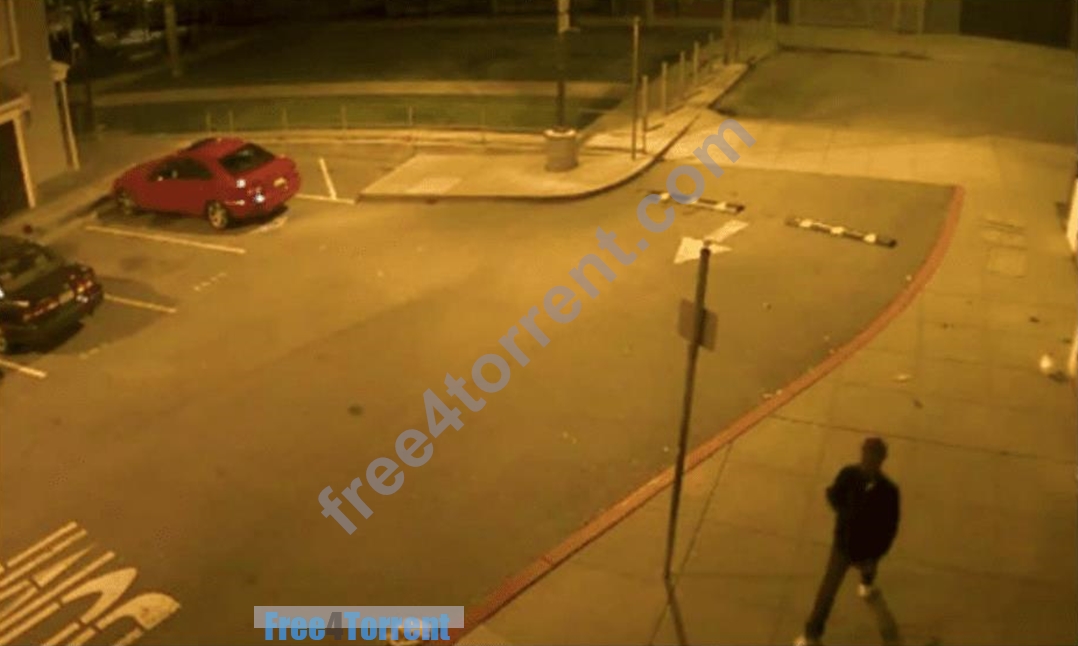
- A. The WDR setting
- B. The IR-cut filter
- C. The exposure time
- D. The white balance
Answer: D
Explanation:
"Adjusting the white balance setting can correct color inaccuracies caused by different lighting conditions, such as the orange tint seen under sodium-vapor street lamps."
- Axis Communications Academy, Network Video Fundamentals, 2022
"White balance ensures that white objects are rendered as white in the image, improving overall color fidelity."
- Axis White Balance Technical Guide
References:
Axis Communications Academy, Network Video Fundamentals, 2022 (p. 24)
Axis Technical Note: White Balance
NEW QUESTION # 174
A camera can deliver two full resolution 30 fps H.264 streams. The customer wants to have four
H.264 streams at 30 fps, from the same product. How can this be achieved?
- A. By changing the codec
- B. By increasing the bandwidth
- C. By increasing the frame rate
- D. By decreasing the resolution
Answer: D
NEW QUESTION # 175
Which of the following conditions has to be met to use multicast streaming?
- A. The network infrastructure has to support multicast
- B. The client has to support streaming over RTSP
- C. The client has to run AXIS Camera Management or AXIS Camera Station
- D. The video device needs to run on firmware version 5.20 or higher
Answer: A
NEW QUESTION # 176
Outdoor ready cameras in the AXIS Q60 Series typically works with 60 W PoE, if we connect it to 30W
PoE it will
- A. Work for a limited time.
- B. Work but with limited pan and tilt speed.
- C. Give picture but impossible to pan and tilt.
- D. Work but with limited temperature specification.
Answer: D
NEW QUESTION # 177
If a customer wants a covert surveillance solution, they should choose
- A. modular cameras.
- B. bullet cameras.
- C. onboard cameras.
- D. dome cameras.
Answer: A
Explanation:
For covert surveillance, modular cameras are the best choice. These cameras consist of a small sensor unit connected to a main unit by a cable, allowing the sensor unit to be discreetly placed in tight spaces while the main unit is hidden elsewhere. This makes modular cameras ideal for situations where discretion is paramount. Axis Communications offers a range of modular cameras specifically designed for covert applications, as detailed in their product documentation and solutions guides.
NEW QUESTION # 178
Match each device with the correct description. Drag each gray box from the left column to the matching blue box in the right column.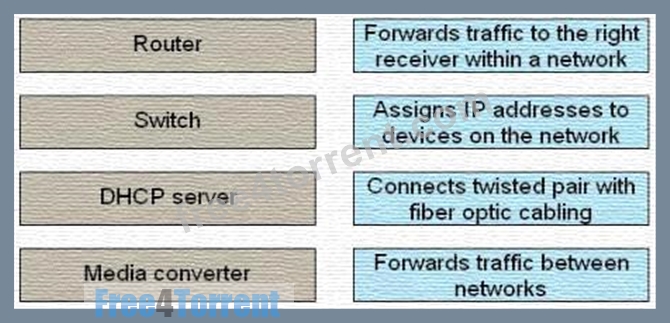
Answer:
Explanation: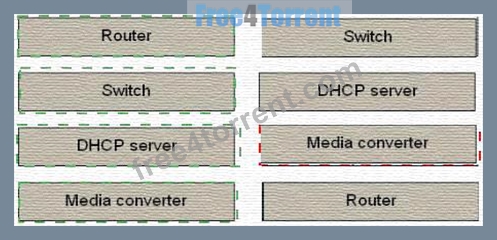
Explanation: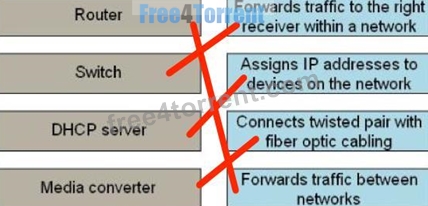
NEW QUESTION # 179
A camera is recording continuously with a constant bitrate of 8 Mbps. How much storage is required to keep the recordings for 30 days?
- A. 2.6 TB
- B. 2.6 MB
- C. 2.6 GB
- D. 2.6 PB
Answer: B
Explanation:
"
NEW QUESTION # 180
What is the appropriate usage for an Axis thermal camera?
- A. Measuring exact temperatures in daytime
- B. Detecting activity in daylight and complete darkness
- C. Identifying people in complete darkness
- D. Detecting motion only at nighttime
Answer: B
Explanation:
Axis thermal cameras are designed to detect activity in both daylight and complete darkness by capturing the heat emitted by objects and people. Unlike traditional cameras that rely on visible light, thermal cameras are effective in various lighting conditions, including complete darkness, fog, smoke, and even camouflaged objects. This makes them suitable for perimeter protection and monitoring in challenging environments.
[Reference: Axis Communications - Thermal Cameras]
NEW QUESTION # 181
What is the main purpose of HDMI out on a camera?
- A. For connecting to a public view monitor
- B. For accessing camera recordings
- C. For central monitoring
- D. For connecting to an installation monitor
Answer: A
Explanation:
The main purpose of an HDMI output on a camera is for connecting to a public view monitor (PVM). This allows live video feed from the camera to be displayed directly on monitors in public areas, which can act as a deterrent against theft or unwanted behavior. Axis documentation states that HDMI outputs are used to provide real-time video display for public viewing, enhancing security presence and situational awareness.
NEW QUESTION # 182
Which of the following allows customer to access between 2-4 channels of live and online stored video at any time?
- A. AXIS Video Hosting System (AVHS)
- B. AXIS Camera Management
- C. AXIS Media Control
- D. AXIS Camera Station
Answer: A
NEW QUESTION # 183
What is a benefit of utilizing external IR illumination with 940 nm?
- A. It provides covert surveillance
- B. It enables full color images
- C. It is easy to align with the camera
- D. It has a deterring effect on intruders
Answer: A
Explanation:
Utilizing external IR illumination with 940 nm provides the benefit of covert surveillance. IR light at 940 nm is almost invisible to the human eye, making it ideal for discreet monitoring without drawing attention to the presence of the camera. This allows for effective surveillance while remaining undetected by intruders. Axis Communications' product documentation on IR illumination confirms this advantage of 940 nm IR light.
NEW QUESTION # 184
What does it mean if a network video product is ONVIF compatible?
- A. The product is compatible with other ONVIF-compliant devices
- B. The product requires a specific type of network configuration
- C. The product can only be integrated with devices from the same manufacturer
- D. The product is more resistant to cyber threats compared to non-ONVIF devices
Answer: A
Explanation:
"ONVIF compatibility ensures interoperability between products from different manufacturers, as long as they are ONVIF compliant."
- Axis ONVIF Compliance Guide
"ONVIF is an open industry forum that provides and promotes standardized interfaces for effective interoperability of IP-based security products."
- Axis Communications Academy, Network Video Fundamentals, 2022
References:
Axis Technical Note: ONVIF
Axis Communications Academy, Network Video Fundamentals, 2022 (p. 56)
NEW QUESTION # 185
A P-iris lens is
- A. An iris specially made for zoom lenses.
- B. A DC-iris with feedback.
- C. An iris with higher light sensitivity.
- D. Axis' standard for DC-iris.
Answer: B
Explanation:
A P-iris lens is a type of DC-iris lens that incorporates feedback to maintain optimal image quality. Unlike a standard DC-iris, which only adjusts based on light levels, a P-iris lens uses a feedback mechanism to optimize the iris position, ensuring consistent image sharpness, depth of field, and optimal contrast. This technology allows for precise control over the iris, which is especially beneficial in varying lighting conditions. According to Axis documentation, P-iris lenses are designed to deliver better performance by continuously adjusting the iris for optimal image quality.
NEW QUESTION # 186
When using an external IR illuminator, what can happen if the beam angle is significantly narrower than the field of view?
- A. Focus must be set manually
- B. Heat can distort the image
- C. The backlight can increase
- D. The exposure may be uneven
Answer: D
Explanation:
When using an external IR illuminator with a beam angle significantly narrower than the field of view, the exposure may be uneven. This can result in parts of the image being overexposed (too bright) while other parts remain underexposed (too dark). Ensuring that the beam angle of the IR illuminator matches the field of view of the camera is essential for achieving uniform illumination across the entire surveillance area.
References: Axis Communications IR Illumination Guide
NEW QUESTION # 187
In which cases would a people counting analytic be used with an Axis camera (Choose three)?
- A. Crowd detection for marketing purpose
- B. Enhanced service levels for public transportation
- C. Early warning system for flooding
- D. Statistics for retail stores
- E. Fire protection in subways
Answer: A,B,D
NEW QUESTION # 188
When dealing with a poorly lit scene, which of the following options would most improve image quality?
- A. Adjusting exposure settings
- B. Adjusting brightness
- C. Adding light
- D. Changing camera placement
Answer: C
NEW QUESTION # 189
What type of lens maintains focus while changing the focal length?
- A. A zoom lens
- B. An IR-corrected lens
- C. A fixed lens
- D. A varifocal lens
Answer: A
Explanation:
"A true zoom lens, also called a parfocal lens, maintains focus while changing the focal length. Varifocal lenses require refocusing after changing the focal length."
- Axis Communications Academy, Network Video Fundamentals, 2022
"Zoom lenses allow you to vary the focal length and keep the image in focus."
- Axis Lens Guide White Paper
References:
Axis Communications Academy, Network Video Fundamentals, 2022 (p. 33)
Axis Lens Guide White Paper
NEW QUESTION # 190
......
LATEST ANVE Exam Practice Material: https://realpdf.free4torrent.com/ANVE-valid-dumps-torrent.html